Recent government announcements have confirmed a significant shift in how apprenticeship funding will be allocated from 2026 onwards.
With funding being redirected towards younger learners, tighter timelines on levy usage, and the reduction of support for certain higher level programmes, the message to employers is clear. Apprenticeships are now firmly focused on entry level talent and early careers.
While much of the discussion has centred around funding changes, the real impact for employers lies elsewhere, in how they attract the next generation of apprentices.
Because in this new landscape, funding alone is not enough.
A system now built around early talent
The latest reforms place greater emphasis on supporting young people aged 16 to 24 into apprenticeships, particularly those leaving school or college.
This creates a clear opportunity for employers. The cost of hiring apprentices is reduced, there is stronger alignment with government priorities, and access to early careers talent is increasing.
At the same time, it introduces a new challenge.
More employers are now competing for the same audience, and that audience is still in education.
Students are making decisions earlier than employers think
Students are not waiting until they leave school to explore their options. Engagement with apprenticeships begins much earlier, with many schools introducing careers content from Year 10 onwards.
This means employers need to build awareness well in advance of recruitment cycles. If students are not familiar with an organisation by the time they begin applying, it is far less likely to be considered.
In reality, employers are no longer just recruiting apprentices. They are influencing decisions that are already forming within the classroom.
Schools are actively using the guide to shape student decisions
Insights from schools and colleges across England, gathered through a recent Apprenticeship Guide survey of its school audience, reinforce just how early and how actively this engagement is taking place.
The findings are based on how schools use the printed Apprenticeship Guide within education settings, supported by the wider digital platform including the website, social channels, and online content that students engage with alongside the guide.
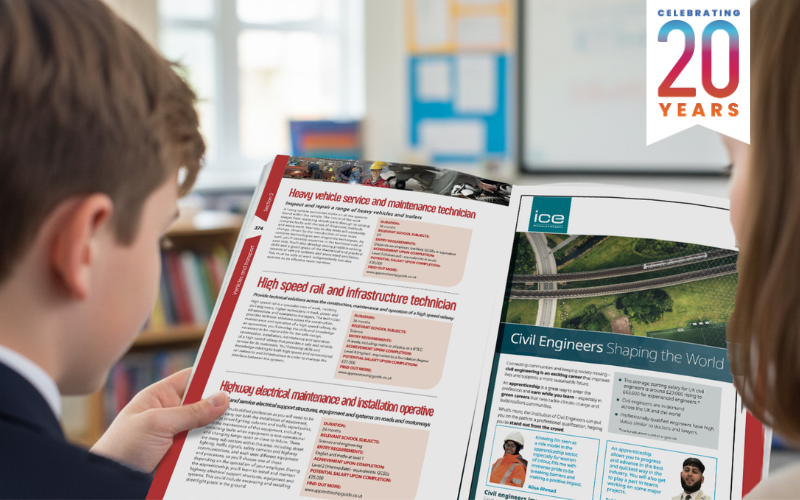
This combined approach means The Apprenticeship Guide is not simply distributed into schools. It is actively used within classrooms, libraries, and structured guidance sessions, while also being reinforced through digital touchpoints that students access in their own time.
Seventy five percent of schools surveyed said they use the guide within one to one careers guidance sessions, placing it at the centre of individual decision making conversations between students and advisors.
Students are engaging with apprenticeship content as early as Year 10, well before application decisions are made. This allows employers featured in the guide to build familiarity over time, both in school and through continued exposure online.
The survey also found that over sixty percent of schools believe the guide improves student awareness of apprenticeships, highlighting the role it plays in shaping understanding and opening up pathways that students may not have previously considered.
Taken together, this demonstrates that employers are not just being seen. They are reaching students before they make their career decisions, through a combination of trusted in school resources and ongoing digital engagement.
Funding pressure is creating urgency
Alongside the shift in funding priorities, employers are also facing increased pressure to use their apprenticeship funding within tighter timeframes.
In simple terms, funding that is not used effectively risks being lost.
This creates a critical window for employers. Apprenticeship roles need to be filled faster, recruitment pipelines need to be stronger, and visibility to the right audience needs to happen earlier.
Waiting until vacancies are live is no longer enough.
Why marketing to schools is no longer optional
In this new environment, apprenticeship success is directly linked to early engagement.
Employers who succeed will be those who build awareness with students before they leave education, position their brand within schools and colleges, and create familiarity with their opportunities over time.
This is a shift from reactive recruitment to proactive talent pipeline building.
And it is happening now.
21 years of connecting employers with future talent
For over two decades, The Apprenticeship Guide has worked directly with schools and colleges across England to bridge the gap between education and employment.
Distributed annually to more than 3,500 institutions, the guide ensures employers are seen by students at the exact point they are exploring their next steps.
This long standing presence means trusted use by schools and careers advisors, consistent exposure to the right age groups, and direct access to future applicants before they enter the job market.
In a more competitive and time sensitive funding landscape, this access has never been more valuable.
Turning change into opportunity
The 2026 apprenticeship reforms are not simply about funding adjustments. They represent a shift towards a more focused, early careers driven system.
For employers, the opportunity is clear. Those who adapt their strategy now can secure stronger talent pipelines, maximise their funding, and position themselves ahead of competitors.
Those who do not risk being unseen, and leaving both talent and funding on the table.
Next steps
Employers reviewing their apprenticeship strategy in light of the latest government changes can benefit from a fresh perspective.
A short consultation can help identify how to reach students earlier in their decision making journey, align marketing with funding priorities, and ensure apprenticeship programmes are visible where it matters most.
In a changing market, the right strategy makes the difference between unused funding and future talent.