Applying for your first apprenticeship can feel difficult when a job advert asks you to talk about your skills and experience.
But what if you have never had a job before?
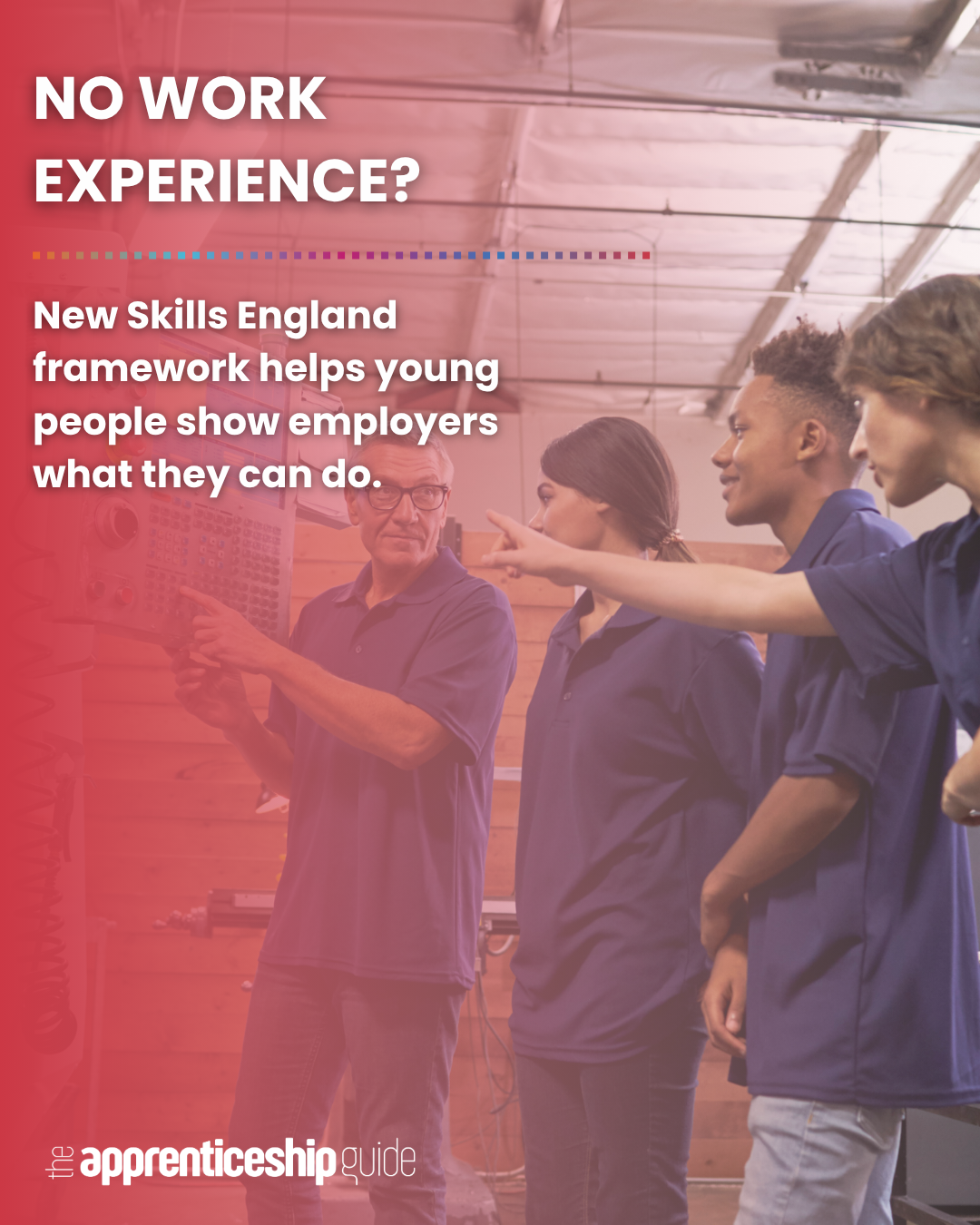
A new Employability Skills Framework, published by Skills England on 5 October 2026, aims to help young people recognise the skills they already have and explain them more clearly to employers.
And the main message is an important one:
You do not need previous work experience to have valuable workplace skills.
Your everyday experiences can build useful skills
Skills England says young people can develop employability skills through much more than paid employment.
School and college projects, sports, hobbies, volunteering, caring for family members and community activities can all help you build skills that employers value.
For example:
Play in a sports team?
You may already have experience of teamwork, communication and adapting when things change.
Help care for someone in your family?
You could demonstrate responsibility, planning and time management.
Completed a group project at school or college?
Think about how you organised tasks, met deadlines, solved problems or worked with other people.
Volunteer?
You may have developed teamwork, communication, leadership or problem-solving skills.
Have a hobby or personal project?
Learning a new skill, creating something or working towards a goal can demonstrate motivation, creativity and the ability to learn.
These are all experiences you can talk about when applying for an apprenticeship.
What skills are employers looking for?
The new framework identifies 13 core employability skills:
- Planning and organising
- Adapting
- Working with others
- Listening
- Speaking
- Leadership
- Learning and investigating
- Creating
- Problem solving and decision making
- Numeracy
- Digital literacy
- Reading
- Writing
The idea is to create a clearer way for young people and employers to talk about the same skills.
You do not need to be brilliant at all 13 before starting an apprenticeship.
An apprenticeship is designed to help you develop skills while gaining real experience at work.
Turn what you’ve done into evidence
One of the most useful things you can do when applying for an apprenticeship is move beyond simply listing your skills.
Instead of writing:
“I am a good team player.”
Give the employer an example.
For instance:
“During a school project, I worked with four other students. We divided the work between us, agreed deadlines and helped each other complete the project on time.”
That gives the employer evidence that you can work with other people.
The same approach can be used for interviews.
Think about:
What did I do?
What skill did I use?
What was I responsible for?
What happened as a result?
Skills England recommends this approach to help young people turn everyday experiences into examples that employers can understand.
Digital and AI skills matter too
The new framework also recognises that the workplace is changing.
Digital skills and the ability to use AI responsibly are becoming important across many different careers.
That does not simply mean knowing how to use an AI tool.
Employers may also value your ability to check information, question whether an AI-generated answer is correct and make your own decisions rather than accepting everything technology produces.
For example, you might use AI to help organise a task or find information, but you should still check the result and make sure it is accurate.
What does the new framework mean for employers?
The framework is not only aimed at young people.
Skills England also wants employers to think differently about how they recruit people at the beginning of their careers.
Someone applying for their first apprenticeship may not have previous employment, detailed industry knowledge or a long CV.
But they could already demonstrate reliability, motivation, initiative, teamwork and communication.
The framework encourages employers to look at a young person’s potential as well as their previous work experience. GOV.UK
That could be particularly important for apprenticeship recruitment, where applicants are often taking their first steps into the workplace.
Applying for an apprenticeship? Start with what you already have
If you are preparing your CV or apprenticeship application, don’t worry if you cannot fill it with previous jobs.
Instead, think about everything you have done so far.
School. College. Sport. Clubs. Volunteering. Hobbies. Projects. Caring responsibilities. Part-time work.
Ask yourself:
What did that experience teach me?
You may discover you already have far more to offer an employer than you realised.
The new Employability Skills Framework is designed to help young people identify those skills and, importantly, learn how to show employers what they can do.